
The Definitive EOR Comparison (Remote, Rippling, Oyster HR, Papaya Global)
Affiliate disclosure: This article contains affiliate links to Deel. If you sign up through my links, I may earn a commission at no cost to you. All comparisons are based on publicly available data, platform documentation, and direct advisory experience.
The Problem With Most EOR Comparisons
Most “Deel vs. X” articles are written by people who read two product pages and called it research. You get a comparison table full of checkmarks, a conclusion that declares a vague winner, and no actual guidance for the decision you’re trying to make.
This one is different.
I’ve spent seven years advising companies on global workforce strategy. I’ve sat in implementation calls, dealt with support escalations in complex markets, and watched finance teams close payroll cycles on multiple platforms. What follows is a structured, honest comparison across the five criteria that actually determine whether an EOR platform works for your company: pricing, country coverage, compliance depth, platform UX, and customer support.
The five platforms I’m comparing:
- Deel — the market share leader, strongest on contractor management and UX
- Remote.com — the pricing transparency challenger
- Rippling — the best choice if you want HR + IT + payroll unified
- Oyster HR — the sustainability-focused mid-market option
- Papaya Global — the enterprise play with the widest geographic reach
Let’s go.
Quick Verdict: Which Platform Wins for Which Buyer
Before the deep dive, here’s the summary for time-pressed readers:
| If you are… | Best platform |
|---|---|
| Hiring in 5+ countries, mix of employees + contractors | Deel |
| US-centric company wanting unified HR/IT/payroll | Rippling |
| Prioritizing pricing transparency above all else | Remote.com |
| Mid-market, values-driven, hiring in standard markets | Oyster HR |
| Enterprise, 500+ employees, very wide geographic spread | Papaya Global |
None of these is the objectively best platform. Each wins for a specific buyer profile. What follows explains why.
See Deel’s All-in-One Platform
EOR, Global Payroll, and Contractor Management — one platform, 100+ countries.
The Full Comparison Framework
Criterion 1: Pricing Structure
Pricing in the EOR space is notoriously opaque. Most providers bury total cost in demos. Here’s what’s publicly known as of 2026:
| Platform | EOR pricing | Contractor pricing | Global Payroll | Pricing transparency |
|---|---|---|---|---|
| Deel | From $599/employee/month | From $49/contractor/month | Custom (~$20–35/employee/month) | Good — calculator available |
| Remote.com | From $599/employee/month | From $29/contractor/month | From $50/employee/month | Excellent — fully public |
| Rippling | Custom (quote required) | Included in HR cloud | Included in HR cloud | Low — requires demo |
| Oyster HR | From $699/employee/month | From $29/contractor/month | N/A | Good |
| Papaya Global | From $650/employee/month | From $25/contractor/month | From $25/employee/month | Mixed |
Key observations:
Remote.com wins on pricing transparency — their full pricing is public, which makes budgeting easier before you ever talk to sales. This is a genuine differentiator for startups and finance-led buyers.
Deel’s contractor pricing ($49/month) is higher than Remote and Oyster, but the feature depth justifies it — more on that in the UX section. The Global Payroll pricing requires a custom quote but typically comes in at $20–35 per employee per month for standard markets.
Rippling’s pricing is the hardest to pin down. It’s modular — you pay for HR, IT, and payroll separately, and the total cost can exceed Deel’s for a comparable setup. The trade-off is capability depth that no other platform matches on the HR/IT side.
Oyster HR’s EOR pricing ($699/month) is higher than Deel’s published rate, though the difference often narrows after negotiations. Their contractor pricing is competitive.
Hidden costs to ask about on every platform:
- FX fees on contractor payments
- Benefits costs (additive to EOR fees on all platforms)
- Setup fees for complex or partner-operated markets
- Per-country activation fees on some platforms
- Offboarding fees (Papaya Global historically charges these)
Winner on pricing: Remote.com for transparency. Deel for contractor value. Rippling for companies that want to absorb HR, IT, and payroll into one line item.
Criterion 2: Country Coverage
Country coverage numbers are often misleading. The difference between “we support 160 countries” via partners and “we have our own legal entities in 50 countries” is enormous in practice — it affects speed, compliance reliability, and support quality.
| Platform | EOR countries | Own entities (approx.) | Contractor countries |
|---|---|---|---|
| Deel | 100+ | ~30 key markets | 150+ |
| Remote.com | 75+ | Growing own-entity network | 170+ |
| Rippling | 50+ | Own entities in major markets | 50+ |
| Oyster HR | 180+ | Limited (partner-heavy) | 180+ |
| Papaya Global | 160+ | Limited (partner-heavy) | 160+ |
What these numbers really mean:
Oyster HR and Papaya Global show the highest country counts, but a significant portion of that coverage is through local partners rather than own entities. In practice this means: when something goes wrong in a partner market, you’re dealing with a third party’s support queue, not the platform’s own team.
Deel operates its own entities in approximately 30 high-priority markets — the US, UK, Germany, Netherlands, France, Canada, Australia, Singapore, and others. These markets cover the bulk of international hiring for most companies. Outside these markets, Deel also operates through partners.
Rippling’s lower country count (50+) reflects a deliberate choice: they focus on markets where they can operate compliantly with own infrastructure. Their coverage is narrower but deeper.
Remote.com has been aggressively building out its own-entity network and is closing the gap with Deel in owned market count. Worth checking their current list if emerging markets matter to you.
Practical guidance: Don’t choose a platform based on total country count. List your top 5–10 hiring markets and ask each vendor which of those are own-entity vs. partner-operated. That question will tell you more than any number on a website.
Winner on country coverage: Deel for own-entity depth in Tier 1 markets. Papaya Global / Oyster for raw geographic footprint (with partner caveats).
Criterion 3: Compliance & Risk Management
This is the criterion that separates serious platforms from marketing-first ones. Compliance failures in EOR are expensive — misclassification penalties, unlawful termination claims, and tax liability can dwarf the cost of the platform itself.
| Platform | Misclassification detection | Auto-compliant contracts | GDPR / SOC 2 | Regulatory update process | Legal support included |
|---|---|---|---|---|---|
| Deel | ✅ Built-in risk alerts | ✅ Yes | ✅ Both | Proactive in own markets | ✅ Legal team access |
| Remote.com | ✅ Basic alerts | ✅ Yes | ✅ Both | Good | ✅ Included |
| Rippling | ⚠️ Limited | ✅ Yes | ✅ Both | Good | ⚠️ Additional cost |
| Oyster HR | ✅ Misclassification quiz | ✅ Yes | ✅ Both | Good | ✅ Included |
| Papaya Global | ⚠️ Limited | ✅ Yes | ✅ Both | Good | ⚠️ Enterprise tier only |
Where Deel stands out on compliance:
Deel’s misclassification risk detection is genuinely the most developed on the market. When you initiate a contractor engagement, the platform flags jurisdictions where the working arrangement could trigger reclassification as employment — specifically relevant for IR35 in the UK, the Netherlands’ recent contractor reforms, and Spain’s TRADE regulations. This doesn’t replace a lawyer, but it’s a meaningful first-pass filter.
Deel also provides access to its in-house legal team for complex employment questions, which is included in the EOR fee in standard markets. For companies without a dedicated employment lawyer on staff, this alone can justify the platform cost versus cheaper alternatives.
Explore Deel’s Compliance & Risk Management
Built-in misclassification detection, auto-compliant contracts, and legal team access in 100+ countries.
Where competitors have edges:
Oyster HR’s compliance experience has a strong emphasis on ethical employment — they include benefits benchmarking by country to help companies offer locally competitive packages, not just legally compliant ones. For mission-driven companies where employer brand matters, this is a meaningful differentiator.
Remote.com’s compliance tooling is solid and their IP protection and invention assignment clauses are well-regarded by legal teams reviewing their contracts.
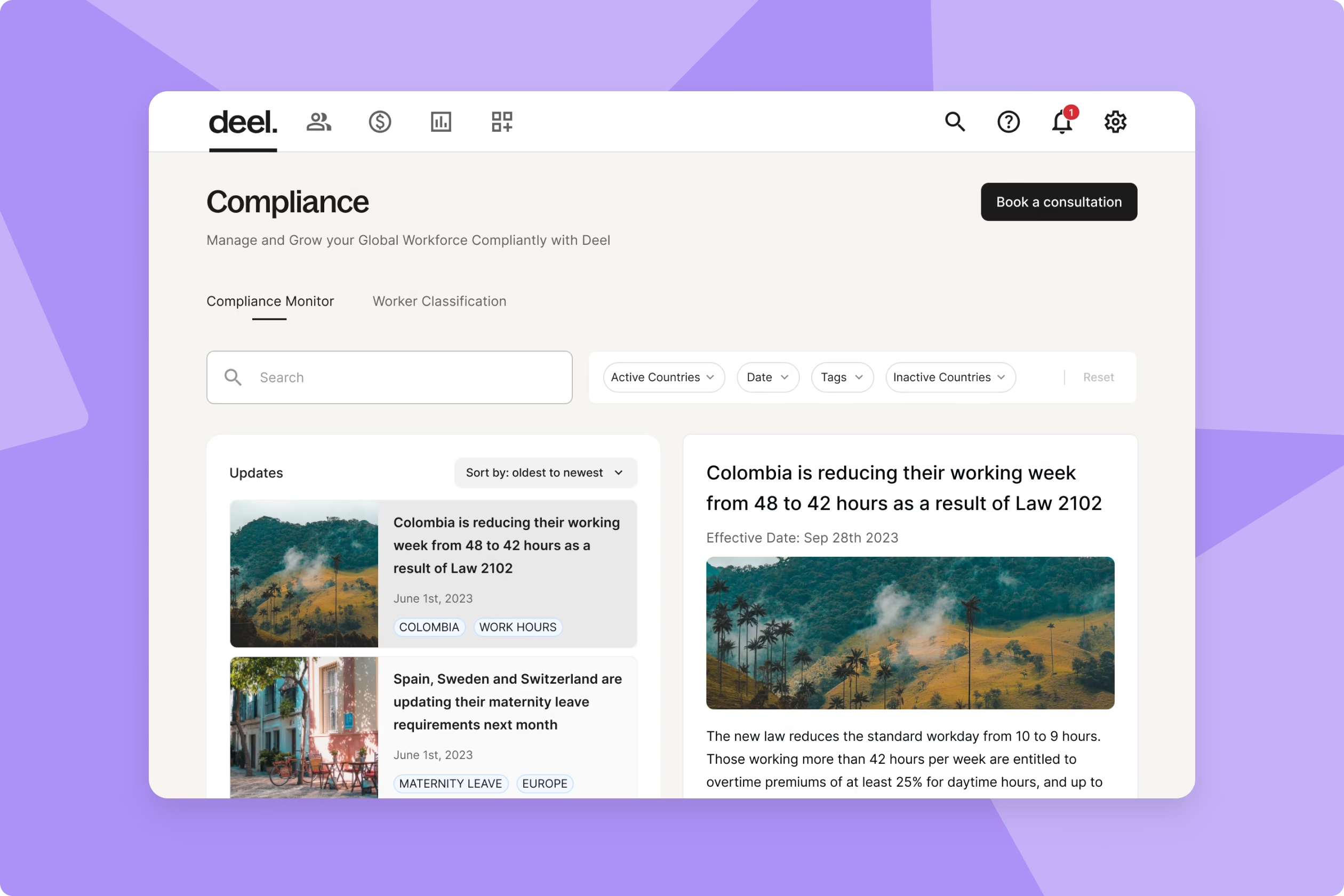
What to watch across all platforms: Proactive regulatory change notification. When a labor law changes in a country where you have workers, you want the platform alerting you — not the other way around. Ask each vendor how they handle this during your demo.
Winner on compliance: Deel for misclassification detection and legal team access. Oyster for ethical employment standards. Remote for IP protection quality.
Criterion 4: Platform UX and Product Integration
The best compliance in the world doesn’t help if your HR team won’t use the platform. UX quality matters — both for the HR/finance team running the platform and for the employees and contractors on the receiving end.
| Platform | Admin UX | Employee/contractor experience | HRIS integrations | Global Payroll capability | Mobile app |
|---|---|---|---|---|---|
| Deel | ✅ Excellent | ✅ Excellent | Good (BambooHR, HiBob, Workday, Xero) | ✅ Strong | ✅ Yes |
| Remote.com | ✅ Good | ✅ Good | Good | ⚠️ Growing | ✅ Yes |
| Rippling | ✅ Excellent | ✅ Excellent | ✅ Best in class (native) | ✅ Strong | ✅ Yes |
| Oyster HR | ✅ Good | ✅ Good | Good | ❌ Not offered | ⚠️ Limited |
| Papaya Global | ⚠️ Average | ⚠️ Average | Good | ✅ Strong | ⚠️ Limited |
Deel’s UX advantage:
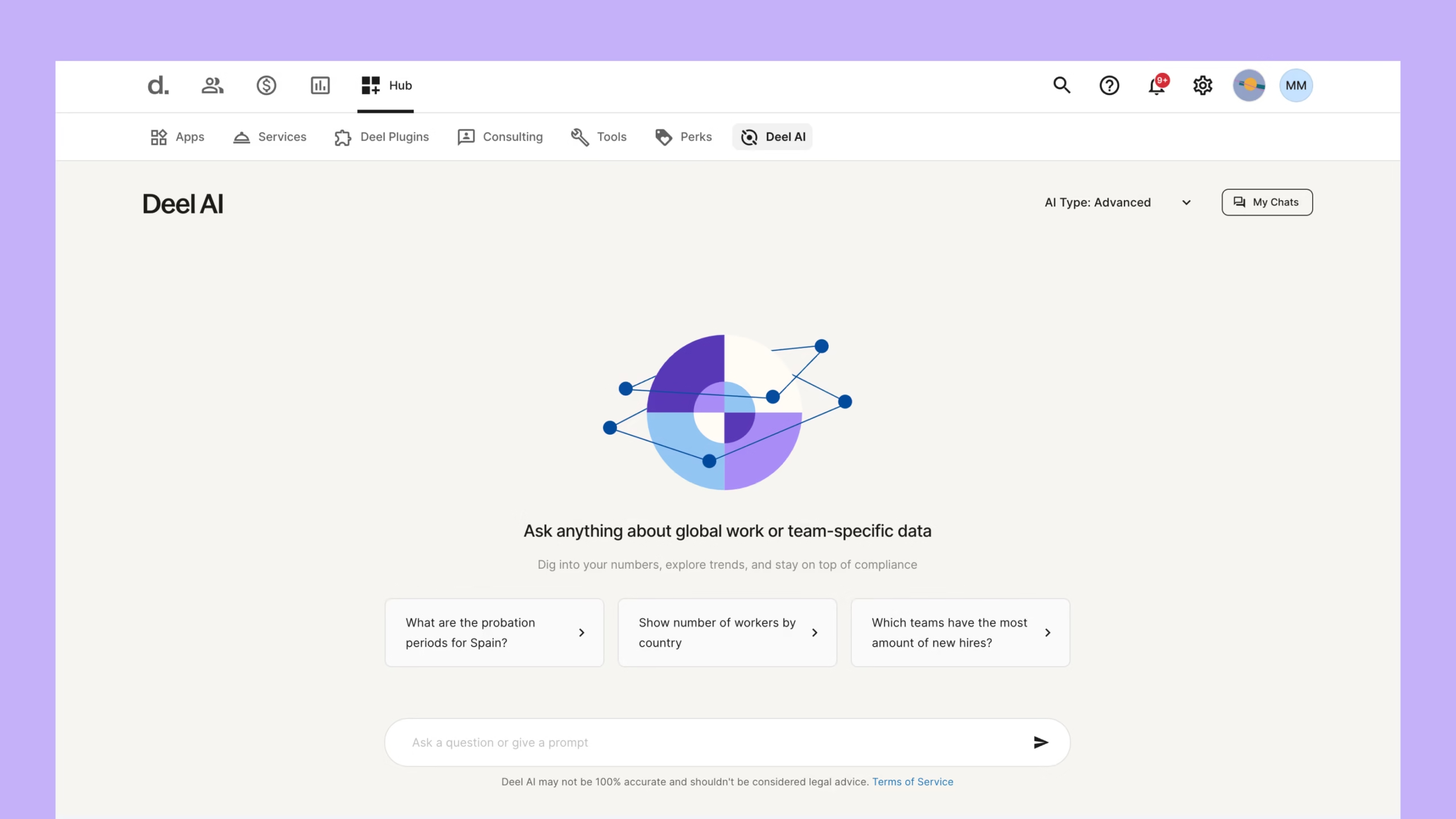
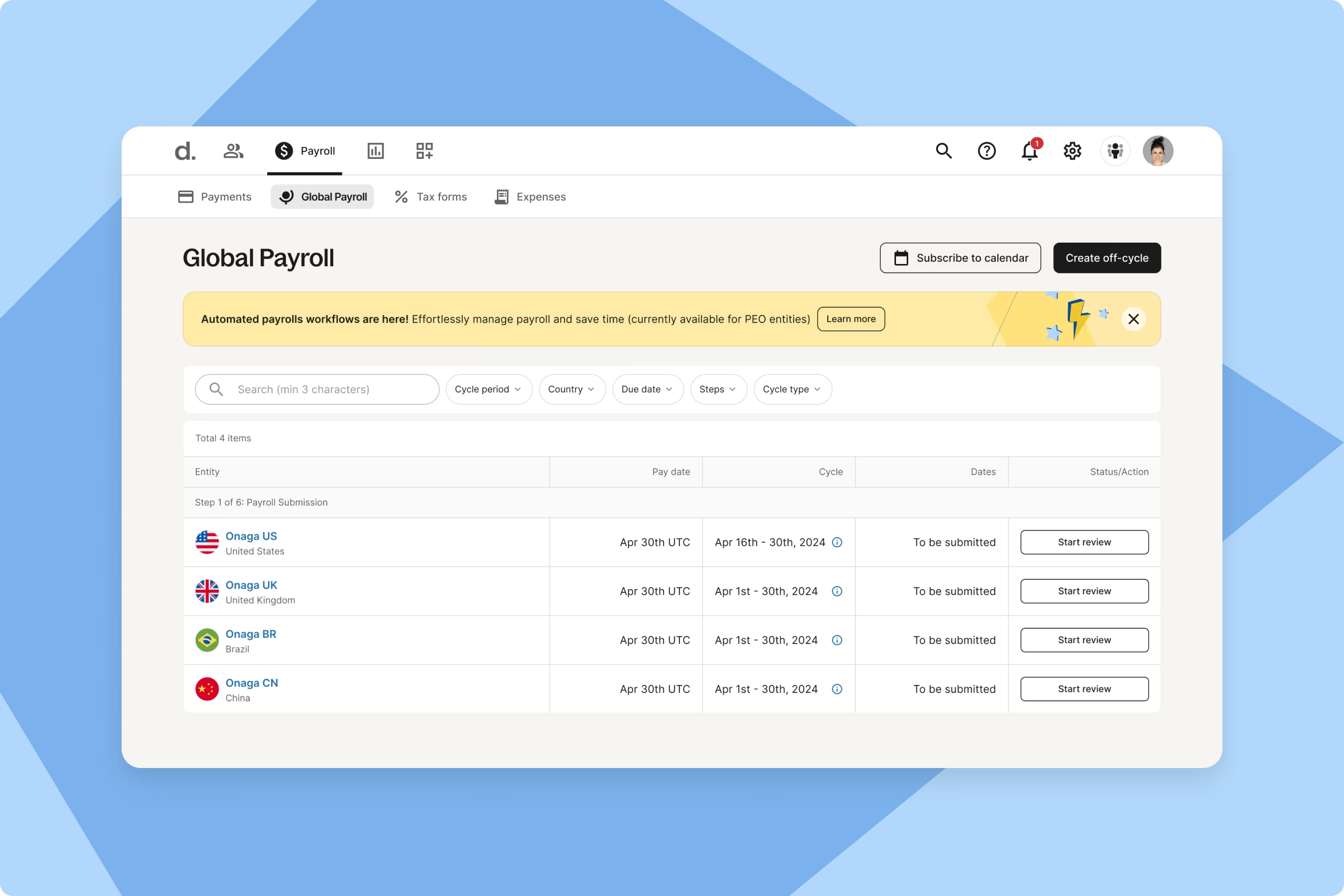
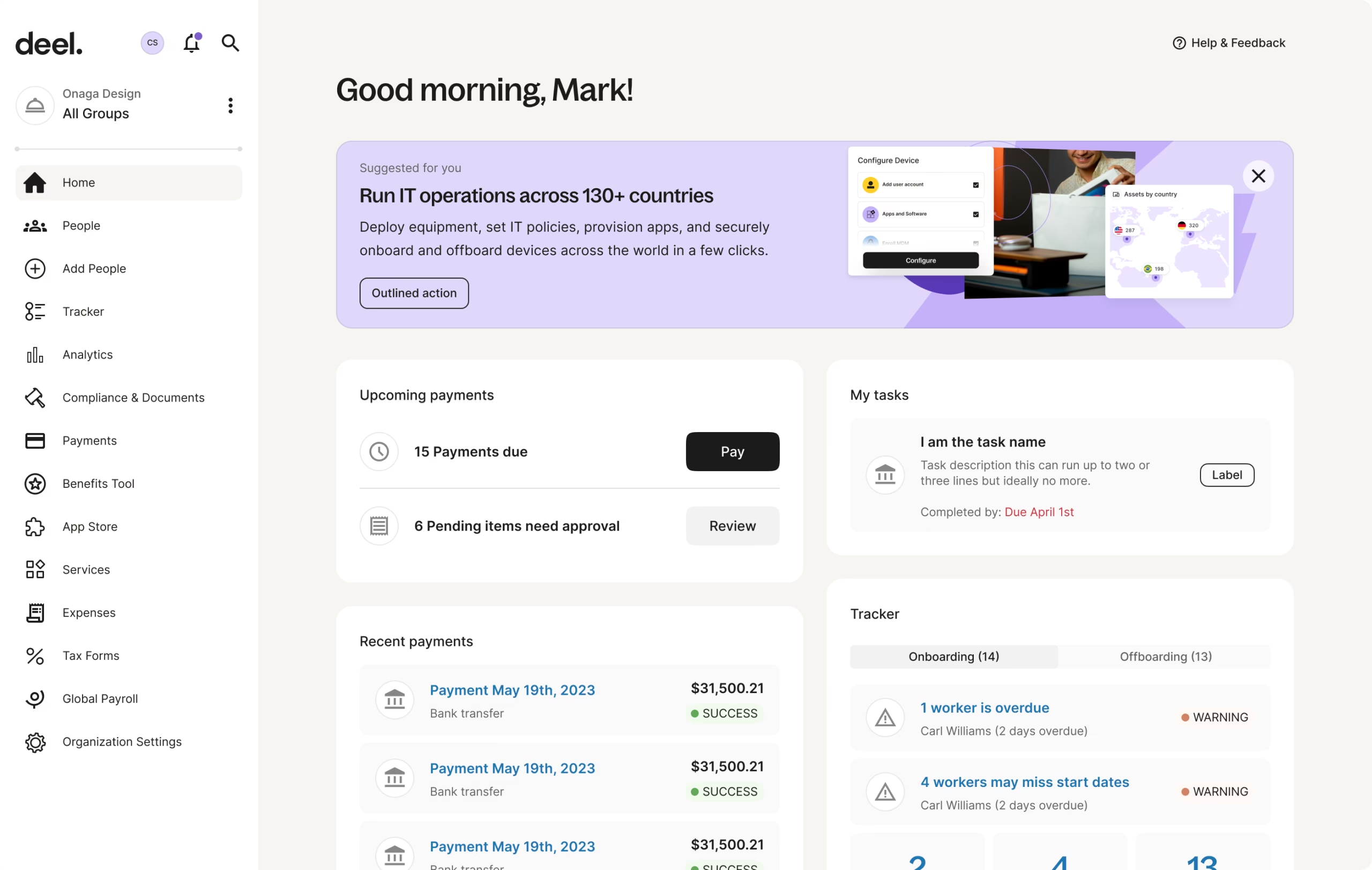
Deel has the most polished admin interface in the EOR space. Onboarding a new EOR employee, generating a contractor agreement, or running a global payroll cycle all follow intuitive flows with clear progress indicators. The employee self-serve portal — where workers view payslips, submit expenses, and manage their documents — is notably better than most competitors.
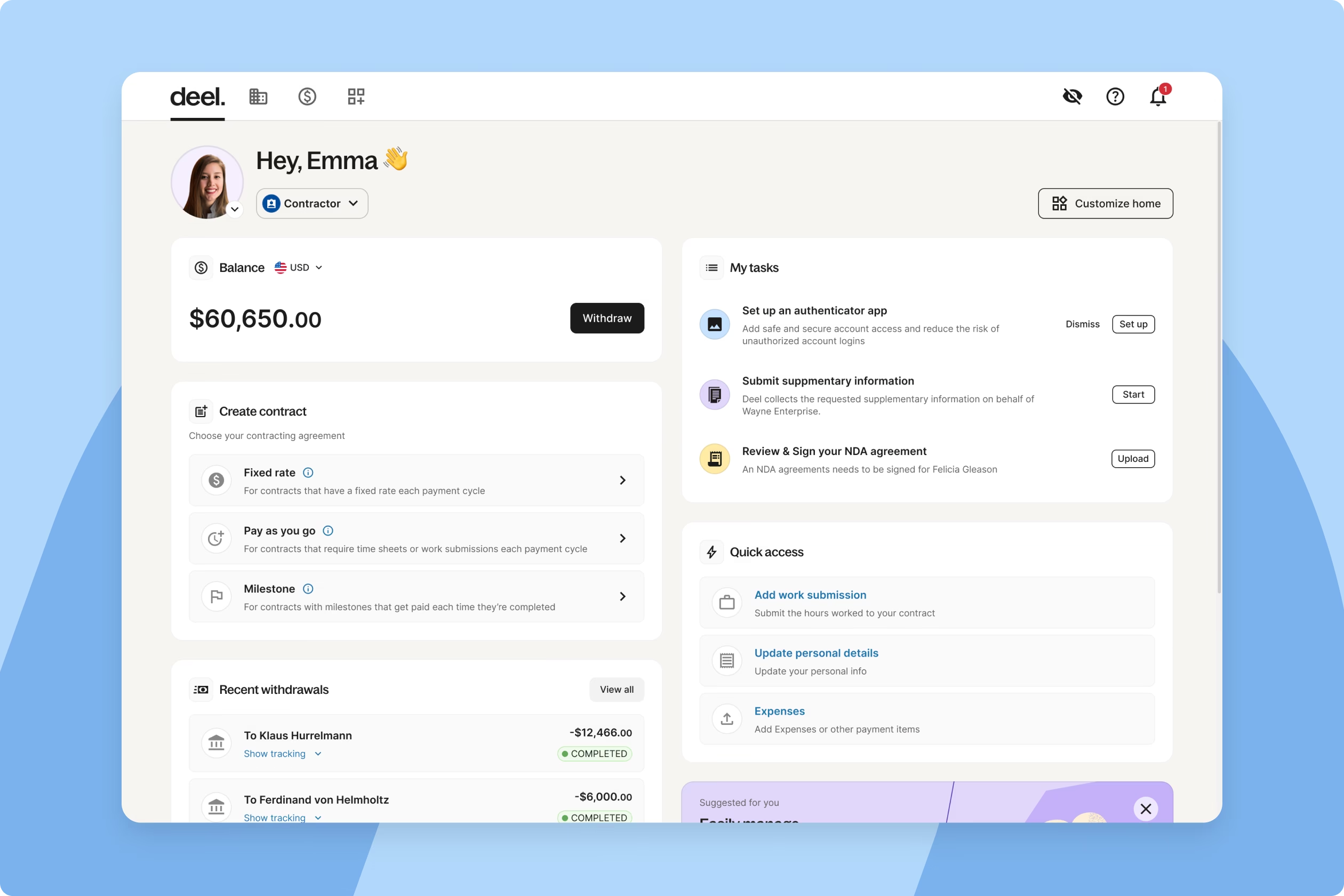
The contractor payment experience is Deel’s signature strength. Contractors can withdraw in 120+ currencies via Wise, Coinbase, PayPal, or direct bank transfer, usually within 1–2 business days of client approval. In my experience managing contractor relationships for clients, the quality of this experience meaningfully affects freelancer satisfaction and retention.
Where Rippling surpasses Deel:
If you want genuinely unified HR, IT, and payroll — employee directory, device management, app provisioning, and payroll all in one system — Rippling is in a category of its own. It’s not just an EOR platform; it’s an operating system for your workforce. The trade-off is cost and complexity. Rippling makes most sense for companies that are US-headquartered, already using it domestically, and expanding internationally.
Run Global Payroll with Deel
Multi-country payroll in one dashboard — with HRIS integrations, FX rate locking, and clean audit trails.
Papaya Global’s UX gap:
Papaya Global is often cited by enterprise HR teams as having the most capable payroll engine but the least intuitive interface. If you have a dedicated payroll specialist comfortable with legacy HR tooling, this is manageable. If you’re a lean team expecting self-service, the learning curve is real.
Oyster HR’s UX strength:
Oyster’s admin experience is clean and thoughtfully designed. Their country onboarding guides — which walk HR teams through what a hire in a new market involves before they commit — are some of the best in the space. For companies hiring internationally for the first time, this educational layer is genuinely useful.
Winner on UX: Deel for overall experience. Rippling for unified HR/IT/payroll. Oyster for first-time international hirers.
Criterion 5: Customer Support
Support quality is where the gap between platform marketing and platform reality is widest. Every EOR vendor claims responsive, expert support. The actual experience in complex markets often tells a different story.
| Platform | Support channels | Response time (standard) | Complex market support | Dedicated CSM | Languages supported |
|---|---|---|---|---|---|
| Deel | Chat, email, phone | Hours (standard) | Mixed (partner markets lag) | ✅ Mid-market+ | 10+ |
| Remote.com | Chat, email | Hours | Good | ✅ Growth+ plans | 10+ |
| Rippling | Chat, email, phone | Fast | Good | ✅ Enterprise | 5+ |
| Oyster HR | Chat, email | Hours | Good | ✅ Scale plans | 10+ |
| Papaya Global | Chat, email, phone | Varies | ⚠️ Mixed | ✅ Enterprise | 10+ |
The honest picture on Deel support:
In own-entity markets, Deel’s support is generally responsive and knowledgeable. Issues get resolved within hours for standard questions — contract amendments, payment timing, document requests.
In partner-operated markets, the experience degrades. Support tickets get routed to local partners who may respond on different timelines and with varying levels of detail. For clients with EOR employees in markets like Indonesia, Nigeria, or Kazakhstan, I’ve seen response times stretch to days during complex situations. This isn’t unique to Deel — it’s a structural challenge for any EOR platform that uses partners — but it’s worth understanding before you commit.
Remote.com has made support a competitive differentiator, with strong customer satisfaction scores on G2. Their support is consistently ranked above Deel on review sites for complex situations.
Rippling offers the most comprehensive support infrastructure for enterprise clients, though standard plan support can be slower.
Oyster HR is frequently praised for the quality and empathy of their support interactions — particularly relevant for companies dealing with sensitive employment situations.
Winner on support: Remote.com for consistency. Oyster for quality in sensitive situations. Deel for speed in own-entity markets.
The Scoring Matrix
Here’s the overall scorecard across all five criteria, scored out of 5:
| Criterion | Deel | Remote | Rippling | Oyster HR | Papaya Global |
|---|---|---|---|---|---|
| Pricing value | 4 | 4.5 | 3.5 | 3.5 | 3.5 |
| Country coverage (depth) | 4.5 | 4 | 3.5 | 3.5 | 4 |
| Compliance & risk | 4.5 | 4 | 3.5 | 4 | 3.5 |
| Platform UX | 4.5 | 4 | 4.5 | 4 | 3 |
| Customer support | 3.5 | 4.5 | 4 | 4.5 | 3.5 |
| Global Payroll | 4.5 | 3.5 | 4.5 | 2 | 4.5 |
| Contractor Management | 5 | 4 | 3 | 3.5 | 3 |
| OVERALL | 4.4 | 4.1 | 3.9 | 3.6 | 3.6 |
Scores reflect capability relative to the needs of a typical mid-market globally distributed company. Enterprise buyers should weight the Rippling and Papaya Global rows differently.
Who Should Choose Each Platform
Choose Deel if:
- You’re hiring full-time employees AND working with contractors internationally
- Speed-to-hire in Tier 1 markets (US, EU, UK, APAC) matters
- You want the best contractor payment experience on the market
- You need Global Payroll + EOR in a single platform
- Your team values UI quality and won’t tolerate a clunky interface
Choose Remote.com if:
- Pricing transparency is your top priority — you want to know the full cost before talking to sales
- Support quality matters as much as features
- You’re hiring in markets where Remote has strong own-entity presence
- Your contractor headcount is high and you want lower per-seat cost
Choose Rippling if:
- You’re US-headquartered and already want to unify HR, IT, and payroll
- You need deep HRIS integration and device management alongside EOR
- Budget is not the primary constraint and you want the most comprehensive platform
Choose Oyster HR if:
- You’re a mission-driven company that prioritizes ethical employment practices
- You’re hiring internationally for the first time and want strong onboarding guidance
- Your hiring footprint is primarily in standard markets (UK, EU, APAC)
- You want strong benefits benchmarking by country
Choose Papaya Global if:
- You’re an enterprise with 500+ employees in 15+ countries
- Your finance team is comfortable with a more complex platform in exchange for payroll engine depth
- You need coverage in non-standard markets and a partner network is acceptable
- You have a dedicated payroll operations team who will manage the platform
Start with Deel — Covers All Five Use Cases
For most globally distributed teams, Deel is the platform that does the most without requiring five different tools.
Contractor Management: Where Deel Has No Peer
This deserves its own section because it’s the clearest competitive differentiation in the market.
If your company works with independent contractors internationally — even a handful — Deel’s contractor management is in a different tier from all competitors.
What sets it apart: 120+ withdrawal currencies and methods (including crypto), built-in misclassification risk detection by jurisdiction, IP and invention assignment clauses standard in all contracts, and a contractor self-serve portal that contractors actually like using.
The practical impact: contractors paid through Deel report faster payments, more currency options, and a cleaner portal experience than through Remote, Oyster, or Papaya. In the competition for top freelance talent, this is a meaningful employer brand advantage.
Manage Global Contractors with Deel
120+ currencies, misclassification protection, and the contractor experience your freelancers will actually appreciate.
What to Do Before You Sign With Any Platform
Regardless of which platform you choose, here’s the due diligence checklist I run through with every client:
1. List your top 10 hiring markets. Ask each vendor:
- Which are own-entity vs. partner-operated?
- What’s the average time-to-hire in each?
- Who handles support escalations in each market?
2. Get a fully-loaded cost model. Ask for:
- Base EOR or payroll fee per employee
- Estimated benefits cost per market
- FX fees for contractor withdrawals
- Any setup, activation, or offboarding fees
3. Ask for references in your specific markets. A vendor who thrives in Germany but struggles in Brazil will give you Germany references. Ask specifically for references in the markets where you’re hiring.
4. Check the contract terms. Specifically: minimum commitment length, renewal price increase caps, and exit terms if you need to migrate employees to a different provider.
5. Run a pilot before full rollout. Most platforms will accommodate a 1–2 employee pilot before a full commercial agreement. Use it.
FAQ
Is Deel the most expensive EOR option? Not necessarily. Deel’s EOR pricing ($599/month) is in line with Remote and below Oyster ($699). Papaya Global can exceed all of these for complex markets. Rippling’s total cost depends heavily on which modules you activate.
Does Deel own its legal entities or use partners? Both. Deel operates its own legal entities in approximately 30 key markets (US, UK, Germany, Netherlands, France, Canada, Australia, Singapore, and others). In all other markets, they work through vetted local partners.
Which platform has the best G2 rating? As of 2026: Deel (4.1/5), Remote (4.6/5), Rippling (4.8/5 overall, though EOR specifically is harder to isolate), Oyster (4.4/5), Papaya Global (4.3/5). Note that Rippling’s high rating reflects its full platform, not EOR specifically.
Can I switch EOR providers mid-year? Yes, but it’s operationally complex. Migrating EOR employees from one provider to another typically requires new contracts, re-enrollment in benefits, and a transition period. It’s doable — I’ve managed several migrations — but it’s disruptive enough that getting the initial vendor choice right matters.
Which platform is best for a startup hiring its first international employee? Remote.com for pricing clarity and ease. Deel for speed and contractor flexibility. Oyster for guided onboarding. All three work well for a first international hire.
Does Deel handle US domestic payroll? Yes. Deel US Payroll is a separate product covering US employees and contractors, including W-2 and 1099 management.
Final Word
The EOR market in 2026 is genuinely competitive in a way it wasn’t three years ago. Every platform on this list has improved substantially. The choice is less “which platform is best” and more “which platform best fits your specific company at your specific stage.”
For most internationally distributed companies — hiring in a mix of established and emerging markets, working with both employees and contractors, and wanting a platform their HR team will actually use — Deel is the strongest overall choice. It’s not the cheapest, and it’s not the best at everything. But the combination of contractor management, EOR depth in Tier 1 markets, Global Payroll consolidation, and platform quality is hard to match as a single package.
If any of the specific caveats in this article apply to you — US-centric with IT complexity (→ Rippling), extreme pricing sensitivity (→ Remote), very wide emerging market footprint (→ Papaya) — then factor those in accordingly.
The best next step for any of these platforms is a demo configured for your actual markets and headcount. The numbers look different once you see a fully-loaded cost model for your specific situation.
Book a Deel Demo — Configured for Your Markets
See what Deel costs and how it works for your specific countries and team size.