Many fast-growing companies start their international expansion using an Employer of Record (EOR) because it allows them to hire globally within days, without the complexity and cost of setting up local legal entities. However, as headcount grows in key markets, EOR fees can become expensive, and the desire for greater control, cost efficiency, and long-term scalability often pushes companies toward establishing their own entity.
This is where a well-executed EOR exit strategy becomes essential. Moving from EOR to your own entity — also known as an EOR to entity transition — is not a simple flip of a switch. It requires careful planning to avoid payroll disruptions, compliance gaps, employee dissatisfaction, or unexpected costs.
In this step-by-step transition plan, we’ll walk you through when to make the move, how to execute it smoothly, potential risks, and best practices for a successful move from EOR to entity in 2026.
Why Companies Choose an EOR Exit Strategy
EOR services are excellent for testing new markets or maintaining small teams. But several triggers signal it’s time to transition:
- Headcount threshold: Typically 10–15+ employees in one country (some experts say the sweet spot starts at 15–20 sustained roles).
- Long-term commitment: You plan to grow significantly in that market over the next 24–36 months.
- Cost optimization: EOR markups on payroll, benefits, and admin can exceed the total cost of ownership of your own entity at scale.
- Greater control: Direct employment allows customized benefits, stronger employer branding, local tax planning, and easier access to incentives or government programs.
- Compliance or licensing needs: Certain industries require a local legal presence.
If your international team feels more permanent than experimental, developing an EOR exit strategy early can save time, money, and stress.
Step-by-Step Transition Plan: How to Move from EOR to Entity
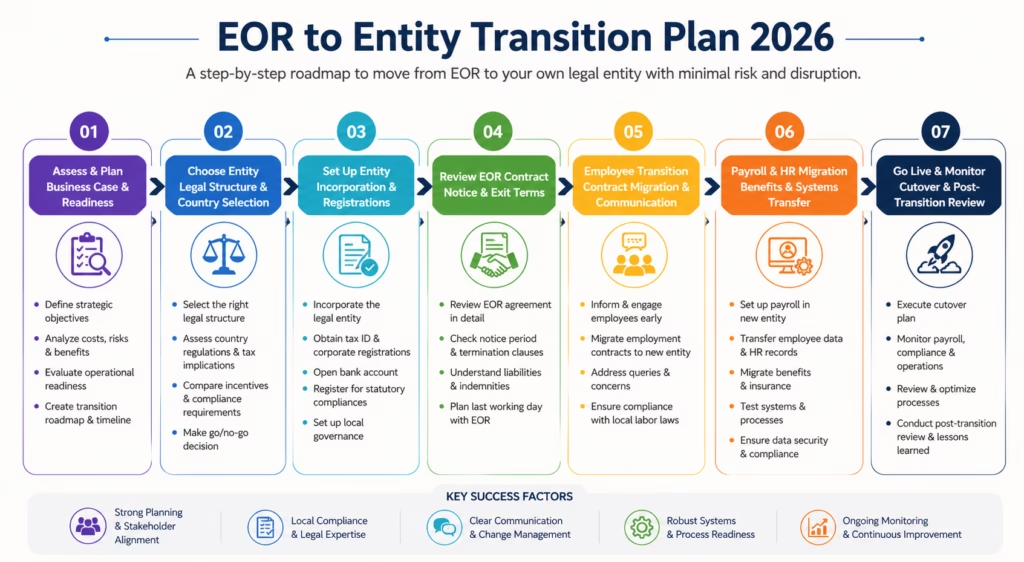
A successful EOR to entity transition usually takes 3–8 months, depending on the country. Here’s a practical roadmap:
1. Assess Readiness and Build a Business Case (4–6 weeks)
Conduct a total cost of ownership (TCO) analysis comparing continued EOR use versus setting up your own entity. Factor in incorporation costs, ongoing accounting, payroll, HR admin, local bank accounts, and potential tax benefits.
Involve key stakeholders: Finance, HR, Legal, and Operations. Define success metrics — lower costs per employee, improved retention, or better compliance visibility.
2. Choose Target Countries and Entity Structure
Prioritize markets with the highest headcount and growth potential. Decide on the right entity type (e.g., subsidiary, branch) with help from local counsel.
Engage incorporation specialists or providers experienced in EOR to entity conversions — many now offer dedicated transition support.
3. Review and Negotiate EOR Exit Terms
Carefully review your EOR contract for notice periods (often 30–90 days), termination fees, data handover requirements, and employee transfer clauses.
Provide formal notice early. Good EOR partners will support the transition rather than create roadblocks.
4. Set Up Your Local Entity
- Register the legal entity and obtain necessary tax IDs, social security numbers, and employer registrations.
- Open local bank accounts.
- Appoint local directors or representatives where required. This step can take 1–6 months depending on the jurisdiction.
5. Plan Employee Transition and Contract Migration
This is the most sensitive part of any EOR exit strategy.
- Draft new employment contracts under your entity while preserving continuity of service, seniority, and accrued benefits.
- Communicate transparently with employees — emphasize that their day-to-day work, reporting lines, and compensation remain unchanged.
- Handle payroll migration, benefits transfer, and any required notifications to local authorities. Aim for a clean cutover date where the EOR ends employment and your entity begins on the same day to minimize gaps.
6. Migrate Payroll, HR, and Compliance
Transfer employee data securely. Set up your own payroll system or partner with a global payroll provider. Update HR policies, benefits administration, and reporting processes.
Test the new setup with a parallel run if possible.
7. Go Live and Monitor
Once the transition is complete, monitor the first few payroll cycles closely. Conduct post-transition audits to ensure full compliance.
Key Risks in EOR to Entity Transitions (and How to Mitigate Them)
- Employee disruption or attrition: Poor communication can cause anxiety. Mitigate with clear town halls and FAQs.
- Compliance gaps during handover: Missed tax filings or benefit contributions can lead to penalties. Use experienced advisors.
- Data and knowledge transfer issues: Ensure complete handover of employee records and compliance documentation.
- Hidden costs: Local entity maintenance, accounting, and statutory requirements add up. Budget realistically.
- Timeline slippage: Incorporation delays are common. Build buffers into your plan.
Working with providers that specialize in EOR to entity transitions significantly reduces these risks, as they often coordinate between the EOR, local authorities, and your internal teams.
Hybrid Model: The Smart 2026 Approach
In 2026, many companies avoid an all-or-nothing switch. Instead, they adopt a hybrid strategy:
Maintain their own entities in core, high-volume markets (for control and cost savings) while continuing to use EOR in newer or smaller markets (for flexibility). This balanced approach is becoming the default for scalable global teams.
Final Thoughts
An EOR exit strategy is not about abandoning a useful tool — it’s about evolving your global operating model as your business matures. When executed well, the move from EOR to entity delivers lower long-term costs, stronger compliance control, and a more professional employer brand.
Start planning your transition plan 6–12 months before you expect to hit scale in a market. Early preparation turns what could be a stressful project into a strategic advantage.
If you’re currently using an EOR and considering setting up entities in specific countries, consult with global expansion experts who have handled multiple successful transitions. The difference between a smooth handover and months of disruption often comes down to proper planning.
Have you gone through an EOR to entity transition? What was your biggest lesson? Share in the comments below. Disclaimer: This guide is for informational purposes only and does not constitute legal or financial advice. Global employment laws change frequently — always consult qualified local legal, tax, and HR professionals before executing an EOR exit strategy in any jurisdiction.