
Malaysia continues to attract global companies with its strategic location, multilingual talent pool, and business-friendly environment. From tech and manufacturing to shared services and fintech, the country offers excellent opportunities for expansion.
However, to successfully hire in Malaysia, companies must navigate the Malaysia Employment Act and complex statutory contributions. Non-compliance can lead to fines, back payments, and operational disruptions. This guide covers everything you need to know about employment law, tax, and social contributions in 2026.
Overview of the Malaysia Employment Act
The Malaysia Employment Act 1955 (Act 265) is the primary legislation governing employment relationships in Peninsular Malaysia. Major amendments (especially in 2022–2023) have expanded its coverage to all employees regardless of salary level in most cases.
Key Requirements under the Malaysia Employment Act:
- Working Hours: Maximum 8 hours per day and 45–48 hours per week (depending on latest updates)
- Overtime: Payable at 150% of normal rate (higher on rest days and public holidays)
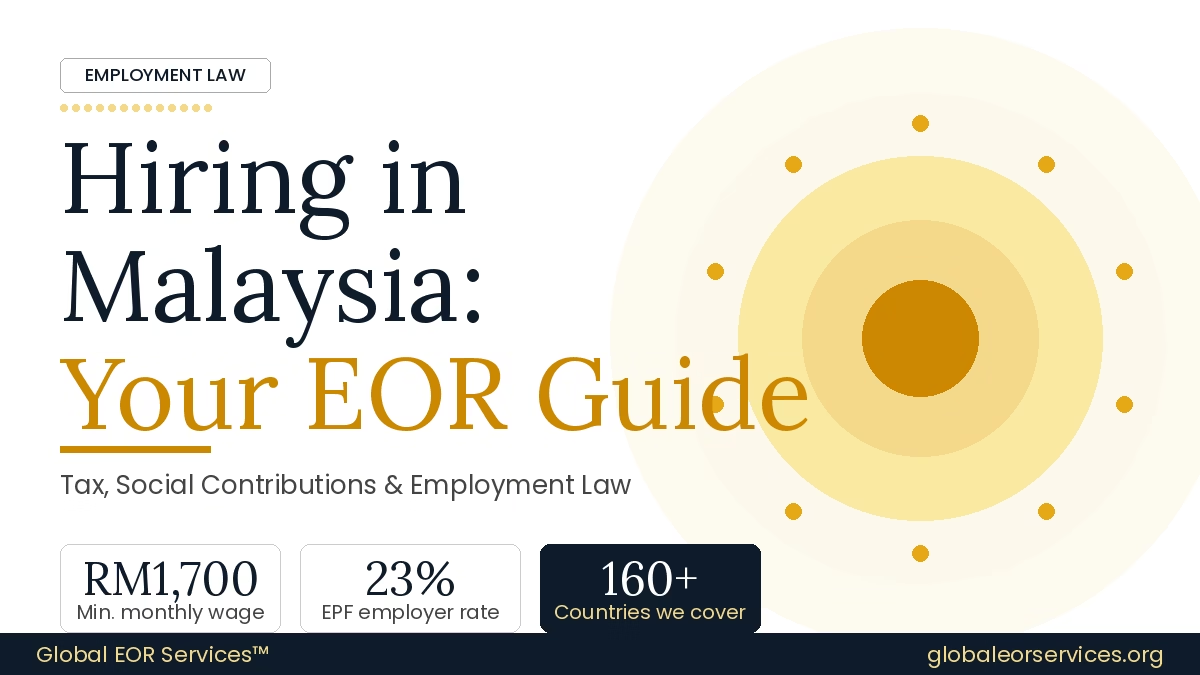
- Minimum Wage (2026): RM1,700 per month (subject to regional variations)
- Annual Leave: 8–16 days depending on length of service
- Maternity Leave: 98 consecutive days
- Paternity Leave: 7 days
- Probation Period: Typically 3 months (maximum 6–12 months in some cases)
- Termination: Notice periods and severance pay requirements apply
Mandatory Social Contributions (Employer Obligations)
1. Employees Provident Fund (EPF / KWSP)
- Employer contribution: 12–13% (13% for salaries RM5,000 and below)
- Employee contribution: 11%
- New requirement (effective Oct 2025): Foreign employees also contribute at 2%
2. Social Security Organisation (SOCSO / PERKESO)
- Covers employment injury and invalidity schemes
- Employer bears most of the contribution (approx. 1.25%–1.75%)
- Wage ceiling increased to RM6,000 per month
3. Employment Insurance System (EIS)
- Employer: 0.2%
- Employee: 0.2%
- Provides unemployment protection
Total Statutory Contribution: Employers typically pay 15–18% on top of gross salary for local employees.
- Vietnam Talent Market: How to Hire Compliantly via EOR
- South Korea Hiring Guide: Compliance, Benefits, and EOR Options
- Hiring in Japan: Labor Laws, Payroll, and Cultural Expectations
- Red Flags to Watch When Evaluating an EOR Provider
- EOR for Enterprise: How Large Companies Scale Global Teams
Tax and Payroll Compliance
- Monthly Tax Deduction (MTD / PCB) must be deducted and remitted to LHDN
- Corporate income tax rate: 24%
- Foreign employees may be taxed at a flat 30% if non-resident
- From 2026: Mandatory electronic stamping of employment contracts via LHDN MyTax portal
Challenges for Foreign Companies Hiring in Malaysia
- Complex registration with EPF, SOCSO, EIS, and LHDN
- Strict rules on expatriate Employment Passes (higher minimum salary thresholds effective June 2026)
- Cultural nuances and language considerations (Bahasa Malaysia, English, Mandarin)
- Managing compliance across Peninsular Malaysia, Sabah, and Sarawak
How an EOR Simplifies Hiring in Malaysia
An Employer of Record (EOR) is the most efficient solution for foreign companies to hire in Malaysia without establishing a local legal entity.
- Official Malaysia Employment Act on Attorney General’s Chambers website
- Employees Provident Fund (EPF/KWSP) official site
- SOCSO / PERKESO official website
- Inland Revenue Board of Malaysia (LHDN)
- Malaysia Digital Economy Corporation (MDEC) or Invest Malaysia guides
Key Benefits:
- Handle all employment contracts compliant with the Malaysia Employment Act
- Manage full payroll, tax deductions, and social contributions
- Register employees with EPF, SOCSO, and EIS
- Support visa and work permit processes
- Reduce compliance risk and administrative burden
- Enable hiring within 7–14 days
Malaysia offers strong talent and growth potential, but success depends on full compliance with the Malaysia Employment Act, accurate tax handling, and timely social contributions. Mistakes in hire in Malaysia processes can be expensive and time-consuming.
Partnering with a professional Employer of Record allows you to focus on building your team and growing your business while an expert manages all legal, payroll, and compliance requirements.
Ready to build your team in Malaysia? Get a free consultation and customized EOR quote for hiring in Malaysia today.